LinuxWorld SF 2006 is under way. I don’t have time for a full report but thought I’d check in.
The show is going pretty well so far. Two days down, one to go. In the booth I’ve got my home dev workstation on hand, and in an amazing stroke of luck my main man, ZFS co-inventor, Bill Moore, supplied me with a Thumper (X4500)! Additionally Alan DuBoff has been there in the afternoons showing off OpenSolaris on both his MacBook Pro (via BootCamp, not Parallel’s) and an nVidia equip’ed Toshiba. Thumper has been a great draw for the booth, both because it showcases Sun innovation and engineering superiority but also jumpstarts discussions of ZFS. Generally just saying “Could you imagine managing all 48 of these disks under LVM or Linux-RAID?” is enough to get people excited about ZFS’s simplicity and power.
Several people came by to take pictures of us in the booth, and OS News came by this morning and has a report up. This was the first time I’d met Eugenia Loli-Queru in the flesh so it was nice to finally shake hands. View the OS News story and pictures here.
Lots of interesting people have been stopping by. I had wonderful conversations with SA’s from Safeway, USAA, Siemens, and others today. I enjoyed talking with folks from LSI, Ingres, Promise, Rackable, and others about how Sun’s going to put them out of business, never hurts to stir up some rivalry in good fun. I find it interesting that a lot of Novell employees seem to enjoy hanging out around us. On the Sun side we had special visits from Tom Goguen, Stephen Lau, Eric Saxe, and others, most of which who just quickly blew by the booth and I didn’t get to chat with much. I even got a fly by from Eric Raymond today but was busy talking to someone and unable to shout a hello.
I want to thank Alan DuBoff for helping out so much in the booth, Bill Moore for supplying the X4500 and hanging out in the booth with us this afternoon, and all the other Sun employees who stopped by or were working in the AMD booth. I want especially to thank Teresa Giacomini who did all the coordination with IDG, supplied us with swag (DVD Starter Kits, “1 Year” tshirts, clings/sticker, signage, etc), and help out in the booth, and Michelle Olson who has gone way above and beyond the call in helping out in the booth. If it weren’t for Teresa the show wouldn’t have happened and if it weren’t for Michelle I’d have gone insane.
Word is that we’ll have more folks out tomorow including Dan Price and Steve Lau, so we’ll see who shows and what happens. If you want to see OpenSolaris in action, get a demo of BrandZ (or anything for that matter), or want to get a rare hands on look at Thumper, stop by the booth and say hello!
Why isn’t sun there? I understand this being LinuxWorld, but for a company to leave you hanging like that…seems pretty crappy. I would like to see Sun step up in a real way if they want us Linux admins to take them seriously.
All Sun is interested in is selling humongo boxes like Thumper to Fortune 100 companies. I don’t know any Linux admins that take Solaris seriously. I do know plenty that are buying Sun’s Opteron boxes.
IMO, Sun will be gone in 10 years. It can’t just keep focusing on large accounts. It can’t put ludicrous mark-ups on it’s x64 equipment like it does on SPARC.
i just love comments like “sun will be gone in 10 years.” i think i’ve heard that parroted over and over for… oh, at least 15 years now. life must be so much simpler for folks with such short memories.
for those of us who’ve been in this silly business since before sun even existed, it’s just amazing to see the same nonsense come up over and over again. doesn’t anybody bother to learn any history anymore? it’s sad to say that i’ve probably forgotten more operating systems and hardware architectures than folks today will ever be exposed to, as the industry converges on fewer and fewer platforms. but i was lucky to grow up in the heyday of computing, the wild-west days of the mid-70s and early 80s when the technologies so prevalent today were all still being invented… and one of the most consistently innovative companies around is sun. do you remember what their original pitch was? “open systems.” they latched on early (or, possibly even coined the phrase?) to the “open systems” concept. they used commodity parts (the m68k, back then, when x86 was still a glorified microcontroller) and standards-based hardware and software components – railing against dec and ibm and their “lock-in” strategies. sun took a lot of arrows in the back for pushing unix in those days, when closed, truly proprietary systems were the norm. they were part of the first wave; linux is a distant follower.
yes, sun has “matured” into a big company, coming full circle from their “upstart” days. their pricing is often absurd and nonsensical. and they’ve made plenty of mistakes. but they’ve also been a huge contributor to some really pioneering advances in computing over the last couple of decades. of course, the drooling morons on wall street don’t care about r&d companies; they love the box shifters. and most of those monosynaptic mouth breathers probably have no idea that their cushy analyst jobs are likely built on sun or other “commercial” unix platforms running in the back rooms.
“thumper” is an entry level sun server. the current “humongo” box, the e25k, now supports over a terabyte of physical memory and 72 dual-core processors. that is the box sun wants to sell to fortune x00 companies. and they sure as hell won’t be running linux on a box like that. except maybe in zones, perhaps.
so gosh, i guess i should thank those linux admins who don’t take solaris seriously — i make a ridiculously comfortable living building real production environments on sun/solaris for companies that went the “lamp” route and found it utterly lacking. maybe if the historical amnesia that permeates the linux community weren’t so obnoxious some of us long-time solaris admins might take linux a bit more seriously…
(sorry for the rant, ben. i usually don’t rise to the bait. i like, and use a linux-based desktop, but i firmly reject the “one size fits all” mentality – use the right tool for the right job. i happen to manage both x64 and sparc systems, solaris and linux, and each has its strengths and weaknesses. i’m just so sick of the “all the world’s a linux/x86 box” attitude – but then, i’ve lived through the “all the world’s a sun” phase, and “all the world’s a vax” before that… none of this is new…)
ambivalentdino…..awesome post
Thank you.
thumper is an x64 box aimed at large companies. How many small/medium sized companies need a singel box that costs $32K? I wasn’t talking about SPARC (that’s only relevant for companies that are stuck on it. Other than CoolThreads, nobody in their right mind would move to SPARC from another platform). For the most part Sun still only knows how to sell to large corporations and it is hurting them. Solaris is a better OS than Linux, but the world will never know that because Sun refuses to try to evangelize that in the education community, and anywhere else outside of large corporations. They will not make it selling a few x64 boxes that people will then proceed to load Linux and Windows on.
I too worked with a VAX for years, and remember how things used to be. This is a different world than that, and Sun is going to end up like DEC, if it doesn’t wake up and embrace education and SMB.
well, i can’t speak for sun’s marketing department or sales targets; they are one of the highest volume “x64″ vendors though, selling quite a few opteron boxes even with their highly mysterious and nonsensical formula for pricing (and naming) their machines… and nobody buys sun at list price – they have lots of programs where you get 25-40 percent hardware discounts. while obviously they want to sell a sparc/solaris bundle where their margins are higher, sun is scrappy and will take what they can get, whether it has their chip or os in it or not.
with their opteron line they have built a fairly attractive range of systems from sub-$1k 1u’s (and desktops) to these latest 4- and 8-way machines. and any small/medium sized business that actually does the research, rather than relying on trade magazines and white papers extolling “how google did it”, they’ll find that there are far more variables and costs associated with “scaling out, rather than up” that often aren’t factored in until they’ve already started down the path.
how much is that “cheap” 1U server when you have to have 50 of them instead of 10 multi-way boxes for equivalent capacity? start adding up network ports, power cords, the management overhead, the heat, etc; those things are huge factors when it comes to tco. smart companies big or small will undertake that kind of analysis before just running out and buying up piles and piles of “cheap” servers.
plenty of people moving away from “dying” architectures like alpha, mips or hppa (all very interesting technologies) that won’t look at x86 or itanic that will consider sparc. yes, there are horror stories about every platform ever built, but my experience with sparc (going back to the original sun4 machines) has been very positive. suns provide “torque”. they degrade gracefully under load, rather than keel over and die like a typical x86 box. they don’t rev at 30,000 rpms so that you can get to the red light faster. they’re built to be part of a balanced system architecture where you run real workloads, not just 32-bit benchmarks that fit nicely in cpu cache and look impressive on spec.org.
but again, i don’t advocate a one-size-fits-all approach. i may hate intel, but i like amd a lot, largely because the opterons are a much more balanced – heck, even “sparc-like” design.
my main point is that most folks wrapped up with computer technology tend to take a very short view, and often don’t place every advance in technology in a proper historical context. everything builds on what came before – both success and mistakes of the past contribute to where we are today. i have been turned off to linux for quite some time by the refusal of far too many of its advocates to acknowledge that; their myopic view is childish and annoying. i’m not harkening back to some idyllic past that never existed, nor do i reject interesting or useful technology based on the advocacy surrounding it. i use it, i test it, i play with, i break it, i fix it, and i tinker with it to judge its merits; solaris, and sparc, are two things that i’ve found worthy based on my experience. i state my biases plainly, and base my advocacy on that experience. take it for what it’s worth.
i am in complete agreement that sun’s abandonment (or at least terribly low profile) in academia is a terrible mistake. gotta get ‘em while they’re young! part of the reason sun was so successful in their early days was that they were the “wintel” boxes of their day, undercutting the big iron boys with powerful, affordable, “open” systems. they need to get back to their roots…
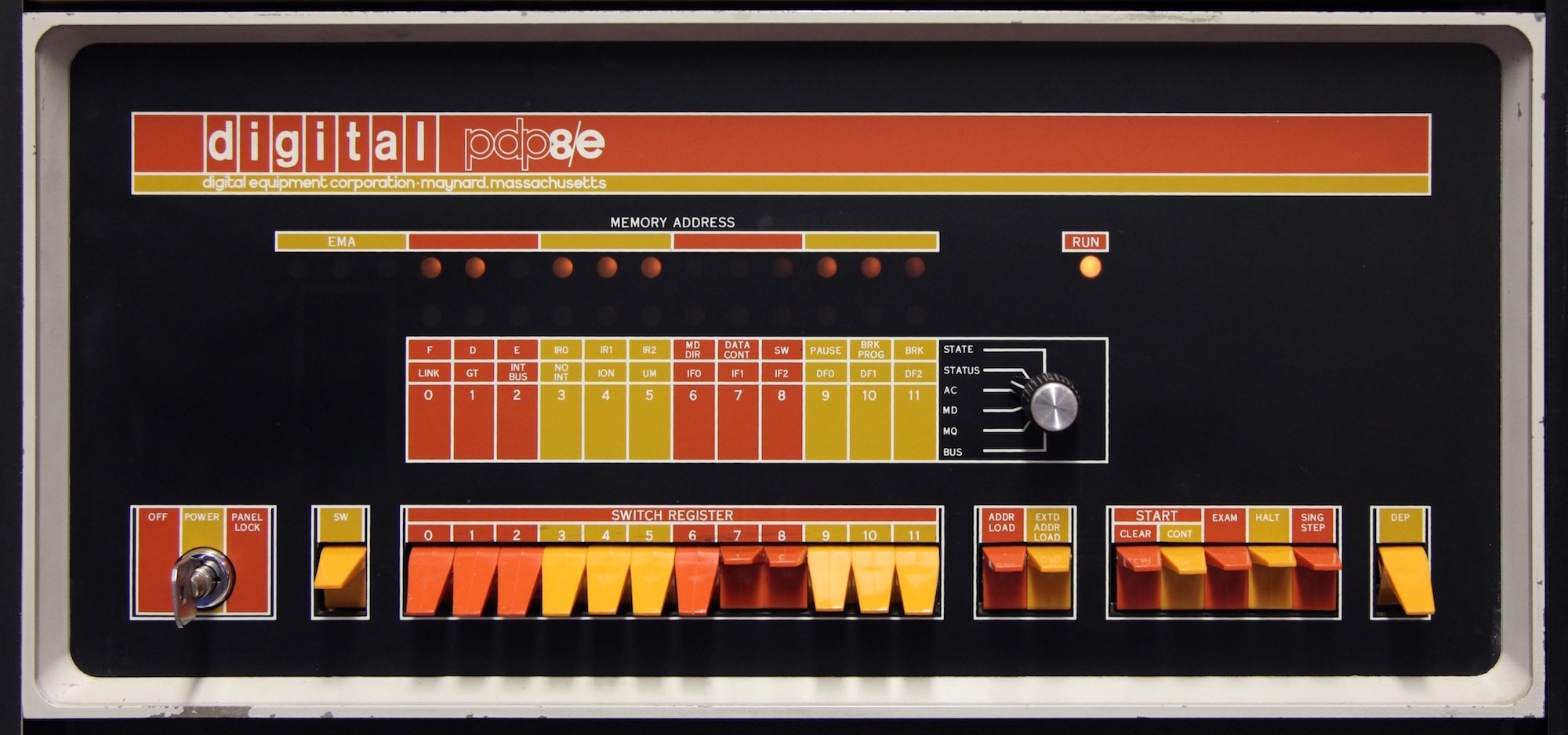
but what do i know? i still miss the pdp-10.
cheers…
Glad we can agree on one point.
Sun is very shortsighted not to realize that small/medium sized companies grow into big ones, and that the Linux kids they ignore today will soon be the CIO, CTOs of the very Fortune 100 companies they bet their existence on.
Solarisuser, I don’t fully get what you mean. It is true that Sun is not IBM, with its Linux marketing, and it is true that it is not Dell, with the ability to put 3 tons of mediocre but custom configured hardware on your doorstep with a few mouse clicks. But I am a kid who works for a decent sized SMB, and I buy Sun x64 when I can. From this I can tell you three things.
1 – The hardware is great.
2 – The price is very good.
3 – 30-something thousand for an x4500 is not that expensive.
Admittantly, not having build-to-order can be unfortunate. But Sun seems to be catching on to the fact that you need more than 3 configs in the store for a commodity server. My hope is, if you put a piece of quality gear like the x4100 in front of your average linux kid, he will “get it”. A couple of minutes with the LOM facilities should be sufficient.
Does it suck that Sun has lost a lot of the .edu market? Yes, but I think they may be getting it together. My school phased out a load of Ultra 10′s this summer. A couple of years back I would say no hope for Sun, but the replacement was a couple dozen Ultra 20′s. Running Solaris.
The take-home is, I think Sun is awake. The risky part of the proposition is that they seem to be determined to stay Sun, and to be mostly honest about that. It could work. I like that way better than IBM’s “market with linux, but remember the bread and butter” strategy.
Very interesting article: “LinuxWorld Quick Report”