Archive for March, 2011

HAM’s Unite: Save 70cm!

Thursday, March 10th, 2011

If your a HAM, you need to be aware of HR-607 which threatens to sell off HALF of the 70cm (430-440Mhz) Amateur Radio band.   I personally have been a 70cm fanatic for years, enjoying the fantastic benefits that band has to offer for clarity, range, and the wonderful repeater linking and experimentation (such as IRLP) infrastructure built on 70cm.

Don’t be caught unprepared, read up and fight against HR-607 to protect our limited spectrum!

KD6OIZ (Ben; HAM since 1993) and KG6NTO (Tamarah, HAM since 2002).

Adventures of an OpsDad: “Work/Life” Balance

Thursday, March 10th, 2011

At LISA, back in November, an attendee asked that I blog about work/life balance… “how you do it”.  I’ve obviously taken my time about it.  Everyone’s situation is different, ideology is different, culture is different.  Parenting is very important to me, so I will indulge, but going in please understand that no two families are the same, therefore I can share my situation, but this is not prescriptive or intended say any other way is right or wrong.

Also… I am totally stealing “OpsDad” from John Allspaw, who once posted to Twitter with the #opsdad tag… I loved it.  I’m using it.

For those who still don’t know, the pink haired beauty at the top of my blog (and on most of the Cuddletech pages) is my wife, Tamarah.  We met at 15 as sophomores in high school.  We married almost 5 years later, which was the soonest I could make it happen.  Following that, we went for 5 years without children, during which I increased my earning potential, Tamarah finished college (BA in British Lit.), and we generally enjoyed each other.  After she graduated and I finally got over the fear of having children we gave birth to our first, Nova.

Last year we gave birth to our fourth, and final, child.  Nova is now 7, Glenn is 5, Conrad is 2, and Eve is almost 1.

We have an ideal situation.  I work from home.  Thanks to the collapse of the housing market in California we were able to buy an affordable big house in Tracy, CA (within driving distance to the Silicon Valley and San Francisco) which is much more family friendly than the Bay Area.  We had kids after Tamarah finished school but before she started her career so that she could stay home with the kids.  We home school the kids.

We have extraordinary balance… one that I intend to hold onto as long as possible.  We’re all in the house all day, together, but our house is big enough that I have my own office, we use the front room as a school house, dining room was converted to a library, the kids double up on bed rooms.  Thanks to the home we were blessed with we have plenty of space to all live and work here and not feel cramped by it.

People often wonder how we can handle four children.   “Do you ever sleep?”  The answer is, yes.  Quite well.  Eve is now old enough that she sleeps through the night.  Tamarah is a morning person, so she has her “alone time” before the kids wake up, and I’m a night person, so I work on personal projects (“midnight hacker”) after she goes to bed at 11-12 untill 2-3am.  When the kids were waking up in the night this essentially put me on the “night shift”, I’d put the kids in the office with me at night in a swing, or hold them and work one handed.

Another question is, “Why do you home school?”  It’s actually a combination of factors.  First and foremost, by and large the public schools in California suck unless you can afford the good neighborhoods.  Private schools are too expensive.  Not only do we object to the curriculum which is overly focused on testing rather than critical thinking, but kids pick up a lot of bad habits from other children, even in the best schools.  We’ve both been around kids for a long time (I paid for SCUBA lessons when I was 12 thanks to babysitting money) and its unmistakable the bad habits kids teach each other.  But, most importantly, Tamarah is a teacher… if you could have a private teacher for your children would you do it?  We can.  We don’t free-lance it though, we use a charter program called CAVA (California Virtual Acadamy), so we submit records, are audited regularly, participate in CAVA programs like field trips and science faires, etc, etc, etc.  Its awesome.

Another question is, “Aren’t they a handful?”  Not really, no.  When I was sent to Beijing for 3 weeks, followed by another week in Hong Kong, Joyent (amazingly) allowed me to take my family.  The kids had a blast, they were amazing.  We took them to Disneyland in Hong Kong before we left Asia as a “thank you” to the kids.  Just 2 weeks ago we did a 4 day family road trip to the Grand Canyon, Utah, and Death Valley… family of 6 in a car for 4 days, no DVD players, no video games… we had a blast!

Another question is, “When do you get a break?”  Actually, never.  We don’t have family near by that can take the kids and we don’t have nannies or babysitters… so we are always with the children.  Once a week the kids are in Awana’s so we pretend we’re the parents of 2 on a date night, but that’s the closest we get.

When your busy with work around the clock, one important thing to do is to include your children as much as you can in your work.  If I have to make a run to the data center I’ll bring one of the kids if I’m not going to be too long.  I take them to the office on a Saturday so they can be in a professional environment.  When I did a conference in Las Vegas for Sun I took the family along.  Its not possible all the time, but whenever you can, do so.

Its also important for them to learn early in life what work is, that work is a good thing, and the boundaries between work and home.  The kids know that my office is “work”… they know when “daddy is working”.  They will bring me things during the day or ask me questions, but they know what it means when I have iPhone headphones in my ears (daddy’s on the phone).  If you explain it to them and show them the parallel to their schooling they appreciate the distinction.  I don’t have incidents where I’m screaming “get out!” or anything, they just know the boundaries.

Its also important, when you spend so much time at home like we do, to get out!  We eat out way too much.  Tamarah is a fantastic chef, but a lot of nights we just need to get out of the house for a while.  We also are blessed to have a lake (Del Val Lake in Livermore, CA) just 20 mins away, so in the summer I’ll close up shop at 6PM promptly and by 6:30PM we’re all swimming in the lake until sundown.  In the winter we’ll go to a local park, go do errands as a family, or just get hot chocolate and coffee at Starbucks and go for a drive.

A big question for many parents is how do other parents discipline.  I do believe in spanking, strongly, but with equally strict guidelines on it.  I never spank in anger.  You must be very consistent.  And, most importantly, it depends on the individual child.  My daughter is strong spirited and needs a much firmer hand than my son who is very gentle.  My kids always know why they are getting a spanking and I tell them in advance how many they’ll get.  After the spanking, I give them a hug and a kiss and off they go.  Spanking is quick, effective, and gentle when done properly.  To me, making a kid sit in a “timeout” for 15 minutes is just cruel and unusual.  The best book I’ve ever read about discipline is Tedd Tripp’s book “Shepherding a Child’s Heart”.  Highly recommended.

A common myth, for those of you with infants, is that of the “terrible 2′s”… that’s BS.  Its 3, not 2.  Personally, my favorite time in a childs development is right around 2, because they are old enough to obey commands and are self powered, they are super cute and can talk a little but its mostly cute gibberish.

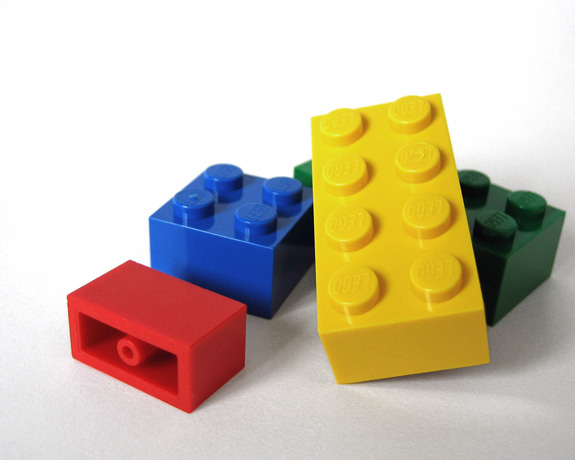
Particularly for the OpsDad, always make sure you spend as much time with your family as you can.  You never know when disaster might hit and you’ll be swamped with work and unable to spend the evening playing with Lego’s.  I’ve always made it clear to staff that for me 6pm to 10pm is completely non-negotiable, that’s family time, period.  The only reason I will work between those times is if something is hard down.  If you have to work on Saturday’s, do it during naptime, not all day, etc.  I hack at night, when everyone is asleep, not during family time.

But, above all… enjoy it!  Your wife will never be younger than she is today.  Your children will never be as young as they are today.  Enjoy it now, don’t wait.  So many guys I see are unhappy, even though they have a beautiful wife and sweet kids.   Box with your boys, build with them.  Kiss your girls and read with them.

I’ve avoided preaching, but I’ll leave you two Bible verses: “Behold, what I have seen to be good and fitting is to eat and drink and find enjoyment in all the toil with which one toils under the sun the few days of his life that God has given him, for this is his lot. (Ecclesiastes 5:18 ESV)” and “Enjoy life with the wife whom you love, all the days of your vain life that he has given you under the sun, because that is your portion in life and in your toil at which you toil under the sun.  (Ecclesiastes 9:9 ESV)”  I live by these principles… I work hard, I learn and get stronger every day, I take pride in my work and am grateful to do it (even on the bad days, at least I’m not bagging groceries), I enjoy my children and my wife, and will as long as I possibly can.


Systems Thinking & The Wisdom of Ackoff

Wednesday, March 9th, 2011

Dr. Russell Ackoff was not the father of System Thinking, but he was in my opinion its best disciple. A voice of reason in the wilderness.

In the following is one of many you will find on YouTube (I recommend you watch as many as you can), but there are a great number of important points he makes that I’d ask you to carefully ponder:

  • “There are 5 types of content in the human mind: data, information, knowledge, understanding, and wisdom. It’s a hierarchy.” (See my previous post for details on the Wisdom Hierarchy)
  • Regarding Peter Drucker’s infamous line, “There is a difference between doing things right and doing the right thing.” Dr. Ackoff says: “See, doing the right thing is wisdom, effectiveness. Doing things right is efficiency. The curious thing is that the righter you do the wrong thing, the wronger you become. If you’re doing the wrong thing and you make a mistake and correct it you become wronger. So it’s better to do the right thing wrong, than the wrong thing right.”
  • “So we’re now questioning, that it turns out every major social problem today is trying to do the wrong thing righter.”
  • “So instead of looking at the efficiency with which we are perusing our objectives, we’re beginning to re-examine the objectives.”
  • Dr. Ackoff considers the education system. “Our system is not about learning, [...] its about teaching. We don’t recognize that teaching is a major obstruction to learning.”; “Who in the classroom learns the most…. the teacher. See the classroom is upside down.”
  • “You can take each system [...] and you can see that they are all perusing objectives that are contrary to their intention.”
  • “You never learn by doing something right, because your already doing it right. You only learn by mistakes.”
  • “There are two kinds of mistakes, the kind you shouldn’t have done. [..] That’s called an error of commission. The other type of error is when you didn’t do something that you should have done. That’s an error of omission.” He goes on to point out that only errors of commission are recorded, and therefore if employees/managers can only get in trouble for doing something they shouldn’t have done, what will they do? Nothing.
  • “It’s our treatment of error that leads to a stability which prevents significant change.”

Once you’ve finished that, I recommend you watch a series of 3 videos from a single talk by Dr. Ackoff on System Thinking.

He really gets into it in Part 2, where he goes through examples of how Analytical Thought is insufficient for modern problems. Modern systems require a new pattern of thought. “‘Why?’ questions, about objects called systems, can not be answered by the use of analysis.” He goes on to explain that analysis produces knowledge but not understanding… it tells us how it works, but not why it works the way it does.

From the second part, “Synthetic thinking consists of 3 steps, which are exactly the opposite of analysis, each one:”

  1. “In the first step of analysis, you take whatever it is you want to understand and you take it apart. The first step of synthesis is you take the thing you want to understand and you say ‘What is this a part of?’ You identify the containing whole of which this is a part. So if I want to understand an automobile I say its part of the transportation system first.”
  2. “In the second step of analysis, I try to identify the properties and behaviors of the parts taken separately. In the second step of synthesis I to explain the behavior of the containing whole. Whats the transportation system?”
  3. “In the third step of [analysis] I try to aggregate the parts into an understanding of the whole. In the third step of synthesis, I dis-aggregate the understanding of the containing whole by identifying the role or function of what I’m trying to explain in that whole.”

Please do go through them, I think you’ll be enlightened. If you are new to Systems Thinking you’ll get an excellent crash course and I think be very pleased with what you find and how it can help adjust your thinking to enable you to better approach day-to-day problems you face.

The System of Profound Knowledge & The Wisdom Hierarchy

Monday, March 7th, 2011

Wisdom, it is said by Lt. Cmdr. Data, “is the difference between knowledge and experience.”

Two of my hero’s of the 20th Century are W. Edwards Deming and Russell L. Ackoff.  Deming is commonly thought of as the “father of quality”.  He taught the Japanese about quality and management in the 50′s and from it Japanese redefined manufacturing and the Toyota Production System (TPS) has become LEAN, which is changing the way all companies do business.  If you hate ISO-9000, blame Deming.  Ackoff was an early pioneer of “Systems Thinking” in the realm of Operations Research (OR).  Incidentally, they were both friends and worked together in the 40′s.

It is commonly understood that the most truly profound ideas are those which are the least surprising, they feel like something you’ve always know.  Indeed, you have always known… the wise teachers are changing something from unconscious and incidental to conscious and intentional.

What is wisdom?  How do we obtain it?  The “Wisdom Hierarchy” has existed in various forms for a long time, but I like Ackoff’s the best.  It is thus:

  • Wisdom: Clarity through experience, understanding of consequences
  • Understanding: Why?
  • Knowledge: How?
  • Information: What?
  • Data: Metrics

There is a progression here.  It hearkens back to how you learned to describe a story when you were in grade-school… the 5 W’s (and one H): Who, What, When, Where, Why, and How.  If you take these 5 W’s and lay them out in order of importance, you see the converse of the “Wisdom Hierarchy”.  Consider a child running to you saying “Danny’s hurt!”, in what order do we want the information?

  1. First, we need the context of the situation: Who is involved, Where and When did this happen?  This is just data, it tells of nothing of importance by itself but it orients us for all following questions as the basis.
  2. Second, we need to turn the data into information: What happened?  But information alone can lead to rash decisions and incorrect conclusions.
  3. Thirdly, we turn that information into knowledge: How did it happen?  At this point we’re getting intelligent, with what and how we can repeat the process or see where things went wrong, but its still isolated… we need to connect this with the System around it.
  4. Fourthly, we turn knowledge into understanding: Why did it happen?  A system view emerges as we see interconnections between parts of the system.  Why did Johny push Danny?  Because Johny wants Danny’s bike.
  5. Finally, over time (experience) we can accumulated understanding into wisdom which enables us to not only understand the past, but project that understanding into the future.  We can predict consequences and outcomes before we act.

So, as you can see, this is intuitive stuff, but Ackoff’s Wisdom Hierarchy makes it more intentional.  You may have a sense of what wisdom is, you may “know it when you see it”, but this Hierarchy gives us a map.

What’s interesting is that we commonly only go part way up the ladder of wisdom.  We get to information or knowledge and then simply assume the rest, using intuition.  But that’s dangerous.  We all know what they say about assumptions: “ass-u-me”.  It certainly isn’t repeatable.  To grow as an organization it is important to institutionalize wisdom, to be methodical about it.  When was the last time you made a decision without knowing the how or why?  Maybe you put out that fire, but it will come back again to be sure.

Deming’s System of Profound Knowledge gives a framework to evaluate problems (questions, things, whatever) in the real world.  It has four components:

  1. Appreciation of a System: Things don’t exist in the real world in isolation, things/people/ideas/etc. are systems.  In order to understand something we must realize this and examine the system.  The word “Why?” is a systems thinking word, when a child asks why they are trying to stitch information from two things together into a single system, they are exploring the inter-relations of the world.  “Why is the sky blue?”  “Why are orders taking so long?” We’re exploring the inter-relations of a system.  Profound knowledge starts with seeing the system.
  2. Understanding of Variation:  In statistical control there are two types of variation: common and special variation.  Difficult problems get even more difficult when we confuse the two.  Common variation is just a fact of life, things aren’t perfect all the time.  If your spouse gets home late by 30 minutes we may say that this is “common variation”, traffic or meetings may have caused them to be late, nothing unusual here.  However, if your spouse is late by 3 hours, that’s a “special variation”, its outside control bounds and indicates something unusual that should be investigated.  We sometimes say, “pick your battles”, and this is an example of that, don’t nit-pick and waste time solving normal variation, focus on the real strange ones that indicate a real problem.
  3. Theory of Knowledge: The essence of scientific method is that of creating and evolving theories.  Theories make predictions and codify your existing understanding.  The system of profound knowledge is about building and refining these theories.
  4. Understanding of Psychology: Trying to understand anything without considering the effects on and assumption of people is pointless.  You must consider the opinions, assumptions, reactions, perceptions of people to bring reality into what is otherwise cold.  Just because something may be efficient doesn’t mean it will be effective, psychology is a big part of that.

Together, the Wisdom Hierarchy and the System of Profound Knowledge are two powerful tools (frameworks really) for approaching problems and change, going from where we are to where we wish to be.  For building something to be proud of, rather than just making ourselves busy with the latest fire.

While you may quickly dismiss both of these, I hope you will reflect on them and see if they can guide you toward being more structured and intentional about how you address life’s challenges, at home or at work.  I have pondered them for some time and continue to find new utility in them.

Note to the reader: The above explanations are my own based on Ackoff’s and Deming’s writings in whole and therefore may not match exactly with explanations you may find elsewhere.  Most bullet point explanations are too short and miss the true point, in my opinion.  This is an attempt on my part to better summarize their true intent.